
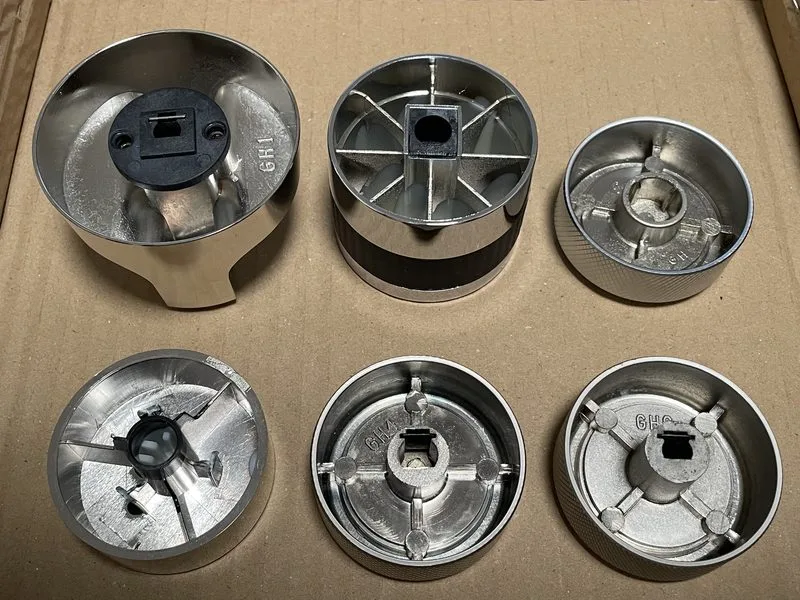
Choosing appliance knobs for an OEM project involves more than appearance. A knob must fit the mating control shaft, work within the appliance panel layout and show the selected setting clearly. For gas stoves, gas hobs, built-in ovens, mini ovens and other small appliances, start with the technical interface.
This guide explains the information to confirm before you select an existing appliance knob model or request a custom review.
Quick answer: How do you choose appliance knobs for an OEM project?
Start with the appliance control function and mating shaft, then define the knob dimensions, panel clearance, material, finish and indicator requirements. Send a drawing or sample with the target quantity and acceptance criteria so the complete configuration can be reviewed before project terms are confirmed.
Start with the appliance and control function
First identify the appliance and the function controlled by the knob. A burner control, temperature control, timer and mode selector can have different shaft arrangements, panel markings and rotation requirements. The appliance model or a drawing of the control panel gives useful context, but it does not replace shaft and dimension information.
For application-specific starting points, see our appliance knob applications, including gas stove, gas hob, built-in oven, mini oven and mini home appliance projects.
1. Confirm the shaft interface before choosing a knob
The internal bore is the critical connection between an appliance control knob and the control shaft. A similar outside diameter or a similar finish does not prove that two knobs will fit the same appliance.
Ask for, or measure, the following:
- Shaft profile: D-shaft, round shaft, splined shaft, double-flat shaft or another profile
- Critical shaft dimensions, including diameter or across-flat dimensions
- Insertion depth and the available shaft length
- Whether an insert, adapter or fixing feature is required
- Required knob orientation at the appliance’s off position
A shaft drawing is best. When a drawing is unavailable, send the removed knob and a mating-shaft sample or clear photographs with measured dimensions. For gas appliance projects, read our guide to gas stove knob shaft interfaces.
2. Define the knob envelope and panel clearance
Once the interface is known, confirm the space available around the control. Record the required knob diameter, overall height, bore depth and clearance to neighbouring knobs, displays, handles or the appliance door. A knob that fits the shaft can still create an assembly or usability problem if its profile conflicts with the front panel.
For a new project, include a front-panel drawing or a marked reference photo. It helps the supplier review the knob profile, indicator position and the clearance around the control.
3. Select material for the actual requirement
Material selection should follow the intended design, application and appearance requirement. Metal-look and plastic knobs can use different production routes and surface treatments, so the final choice should be checked against the drawing or reference sample.
- Zinc alloy: a starting point for die-cast knob designs and a metal appearance.
- Aluminum alloy: an option to review where the desired form, surface treatment or visual direction differs.
- Engineering plastics: ABS, Bakelite, PBT and PA6 options can be reviewed against the required application and design.
Browse our current zinc alloy appliance knobs, aluminum appliance knobs and plastic appliance knobs for model references. Do not choose a material from appearance alone: send the appliance conditions and acceptance requirements for a project-specific review.
4. Specify the finish, colour and markings
The visible details of appliance knobs affect both brand appearance and operation. Include the requested colour, surface finish, indicator line or dot, icon, scale, logo and printing requirements in the RFQ. State whether the indicator must align with an off mark, temperature scale, burner position or function symbol.
Where a reference sample is available, provide photos of the front, side and rear faces. If colour or finish approval is important, define the approval method before production terms are confirmed.
5. Decide whether an existing model is a starting point or a final match
An existing knob model can shorten the initial discussion, but it should be treated as a reference until its shaft interface, dimensions, markings and appearance have been checked. Use a model page to compare published information, then send the project details for confirmation.
For example, our gas stove and cooker knobs page and oven control knobs page group models by application. Individual product pages remain the place to review model-specific dimensions and confirmed application details.
6. Prepare a complete OEM knob RFQ
A complete RFQ reduces avoidable back-and-forth and makes it easier to compare options. Include:
- Appliance type and control function
- 2D or 3D drawing, reference sample or marked photographs
- Shaft profile, dimensions and insertion depth
- Required knob diameter, height and panel-clearance limits
- Preferred material, colour and surface finish
- Indicator, icon, scale, logo or printing details
- Acceptance criteria, target quantity and target schedule
If a point is not yet fixed, identify it as open rather than assuming it matches a reference knob. This lets the supplier review feasibility before issuing project-specific commercial terms.
Frequently asked questions
Can I select appliance knobs by outside diameter only?
No. The outside diameter is only one requirement. Confirm the mating shaft profile, critical dimensions, insertion depth, panel clearance and indicator orientation before treating a knob as a suitable match.
What is the best reference to send for a custom appliance knob?
A dimensioned drawing is the preferred reference. A removed knob, mating-shaft sample and marked photographs can support the review when a drawing is not yet available.
Should material be chosen before the shaft interface?
Confirm the shaft interface and knob envelope first. Material and finish can then be reviewed against the intended design and application requirements.
Questions to ask before you approve a knob design
- Does the proposed bore match the mating shaft drawing or sample?
- Does the knob clear the panel and neighbouring components through its intended rotation?
- Is the indicator position defined for the appliance’s off position and control scale?
- Are material, finish and marking requirements written into the approved specification?
- What sample, drawing or acceptance information is still needed before a final project decision?
Discuss your appliance knob project
GHKnob develops metal and plastic appliance control knobs for OEM and ODM projects. Send the appliance details, shaft information, drawing or sample through our contact page so the interface, dimensions and appearance requirements can be reviewed together.