
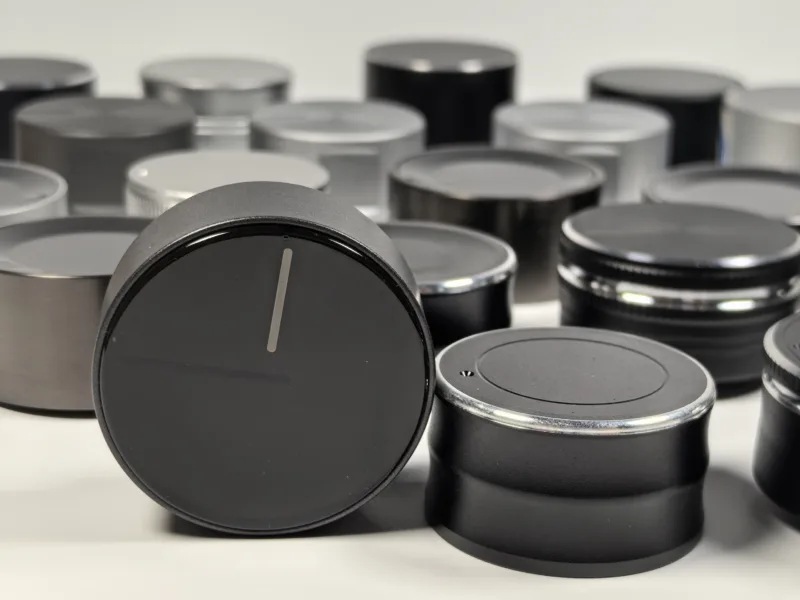
We produce zinc die-cast knobs in our own factory, using hot-chamber die-casting machines. The mold forms the shaft bore and the knob’s basic diameter and height. Machining follows where needed, including CNC work for the specified surface texture. We then add the finish, apply the markings and fit any accessories required for the order.
Some orders call for a knob body alone. Others include spring components, a plastic shaft insert or a decorative piece that needs to be assembled with the metal body.
Casting in our own factory
Our casting equipment includes hot-chamber machines from 壹牛. Typical molds for our stove knobs have four or six cavities, depending on the model. Each cavity forms a knob body, so the mold creates several bodies during a casting cycle.

Hot-chamber die casting at our factory. The foreground shows cast parts before the later production stages.
For a buyer comparing models, this means the required shape and shaft connection need to be considered together. A familiar-looking front face does not establish that the existing mold produces the bore your appliance needs.
What is cast directly, and what is machined afterward?
The work is divided between the mold and the later machining operations:
| Feature or operation | Our production approach |
|---|---|
| Shaft bore | Formed directly during die casting |
| Basic outside diameter and height | Formed during die casting |
| Gate and flash removal | Carried out by machining |
| Specified surface texture | Added through subsequent CNC machining |
This distinction helps when discussing a reference sample. The sample’s outside shape, internal fit and surface detail may come from different production steps. A request to change a surface texture is therefore a different manufacturing question from a request to change the cast body.
For a custom design, we review the proposed features against the actual part. The table describes our confirmed approach; it does not mean that every new bore profile or decorative detail can be made with an existing mold.
Ejector contact is kept on the underside
After casting, ejector pins push the knob body out of the die. In our knob tooling, they act on the bottom of the part. This keeps their contact marks off the visible front and outer decorative surfaces.
The underside is easy to overlook in a front-view product photograph, but it is where the shaft connection and any internal components are located. A drawing or a rear-view sample is useful for understanding that construction before selecting a model.
Painting and electroplating zinc die-cast knobs
We offer painting and electroplating for zinc knob projects. The choice follows the appearance required for the appliance, including the finish on the front face and the surfaces visible around the side of the knob.
Painting and electroplating are also established finishing routes for zinc castings in the International Zinc Association’s finishing guidance. The appearance of a finished knob, however, needs to be specified for the actual model rather than selected from a process name alone.
A physical finish reference helps communicate the intended result. It should show the areas that matter on the installed appliance, especially when the knob sits beside a control panel or other decorative trim. For a comparison of the available approaches, see our surface-treatment guide for stove and oven knobs.
Markings are added after the surface finish
We add indicator lines and other markings after the surface treatment. Depending on the design, the marking can use spot-applied paint, laser marking or screen printing.
The requested mark should be shown on the knob drawing or appearance reference. Its position needs to make sense when the knob is installed, so a clear front view is helpful alongside the shaft information. A line, symbol or logo should be reviewed as part of that finished appearance.
The method depends on the mark and the chosen surface. We confirm it for the project rather than treating every marking method as interchangeable on every finish.
Accessories depend on what the customer needs
The supplied assembly varies by order. We can fit the specified accessories, such as spring clips, spring rings or plastic shaft inserts, when the customer requires them. These components need to be identified as part of the order configuration.
A plastic shaft insert and a plastic decorative piece serve different purposes. The shaft insert belongs to the internal connection. A decorative piece forms part of the visible design. The second factory photograph shows an assembly operation involving a metal knob and a plastic decorative insert.
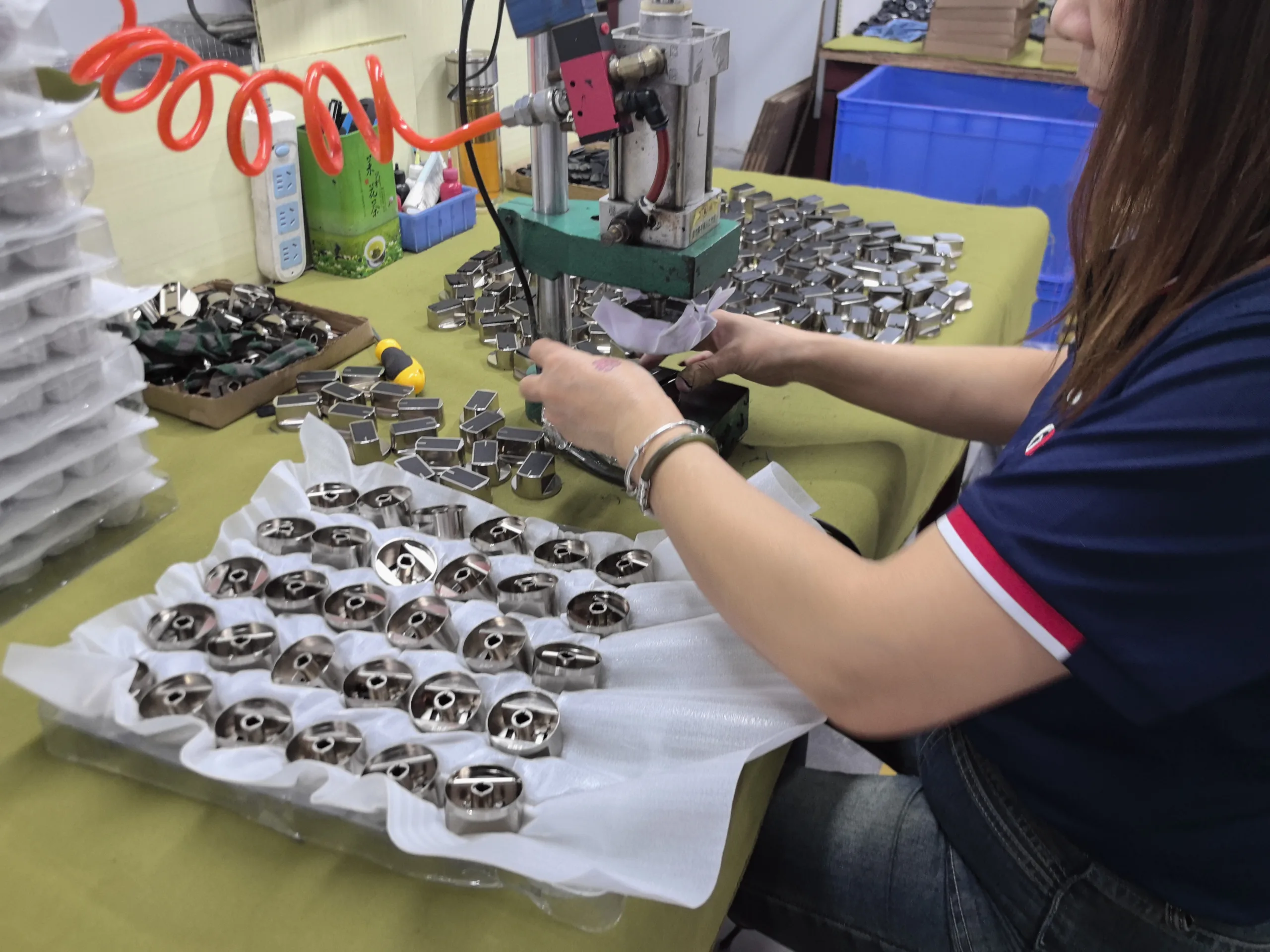
A pneumatic press seats a plastic decorative insert into a metal knob body, bringing the two parts together securely and evenly.
When ordering, confirm whether you need a knob body or the complete assembly, and identify the accessories and decorative components to be included. Keep that configuration with the part drawing or sample reference.
Discuss the knob you need to purchase
Browse our zinc alloy appliance knobs to explore designs for your next stove or oven project. For a custom requirement, send a drawing or sample reference with the desired appearance and any accessory or decorative-insert requirements.
Send your knob details for a manufacturing review so we can discuss the casting, machined details, finish, markings and supplied assembly for your appliance.